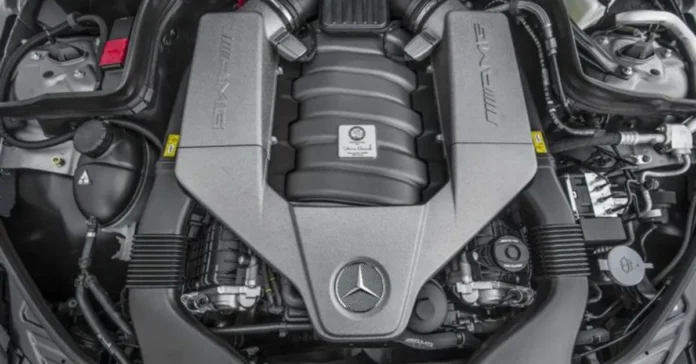


Is the Traditional AMG V8 Engine Dying?
The roar of a handcrafted Mercedes-AMG V8 has defined automotive exhilaration for decades. Yet in an era of tightening global emissions regulations, questions swirl about its survival. Stricter standards like Europe’s Euro 7, alongside California’s aggressive mandates and similar policies worldwide, are compelling manufacturers to downsize engines, electrify powertrains, and prioritize efficiency over raw displacement.
Downsizing was once the dominant narrative. Turbocharged four-cylinders paired with hybrid systems promised comparable performance with lower CO₂ outputs. Mercedes-AMG experimented with this in models like the C63, swapping the V8 for a plug-in hybrid four-cylinder setup. Customer backlash was swift and vocal, highlighting a fundamental truth: enthusiasts crave the visceral character—the thunderous exhaust note, instantaneous torque delivery, and emotional connection—that a large-displacement V8 provides.
Regulations are not vanishing. Fleet-wide CO₂ targets, particulate filters, and real-world driving emissions testing demand innovation. However, AMG has demonstrated that the V8 is not obsolete but evolving. Electrified variants and efficiency improvements allow it to meet future rules without sacrificing its soul. The traditional naturally aspirated or even early turbo V8 may fade, but its high-performance essence is being reinvented. Far from dying, the AMG V8 is adapting to a hybrid and potentially carbon-neutral future, proving that performance and responsibility can coexist.
Current Models Still Featuring the Twin-Turbo V8
Enthusiasts can still revel in the legendary 4.0-liter twin-turbo V8 that has become synonymous with AMG’s pinnacle offerings. This engine, handcrafted at the Affalterbach facility, delivers a signature blend of power, refinement, and sound that electrified alternatives struggle to replicate.
Flagship models continue to showcase its prowess. The Mercedes-AMG GT Coupe, particularly the GT 63 variants, harnesses the biturbo V8 for blistering acceleration—often exceeding 577 horsepower in non-hybrid forms—while maintaining sharp dynamics suited to both road and track. The G 63, an icon of the G-Class lineup, pairs the 4.0L V8 (producing around 585 hp and 850 Nm of torque) with legendary off-road capability, creating a unique super-SUV experience. Its thunderous presence remains undiminished.
In the luxury performance sphere, the S 63 E Performance integrates the V8 with a potent electric motor, yielding hybrid supremacy while retaining the engine’s core character. These models affirm that the twin-turbo V8 is far from a relic; it anchors AMG’s current halo lineup, offering buyers uncompromised excitement in an increasingly regulated landscape.
Production continuity signals confidence. AMG’s commitment ensures these powerhouses will grace roads for years, bridging the gap to more advanced solutions.
Synthetic Fuels (E-Fuels) and High Performance
Synthetic fuels, or e-fuels, represent one of the most promising lifelines for high-performance internal combustion engines. Produced using renewable energy to combine captured CO₂ with hydrogen, these carbon-neutral drop-in fuels can power existing V8 architectures with minimal or no modifications.
Technically, e-fuels are highly compatible with AMG’s twin-turbo V8. They burn cleaner, potentially reducing net CO₂ emissions by up to 85-90% over the lifecycle when produced with green energy. High energy density allows retention of the engine’s power output, throttle response, and range—advantages batteries still struggle to match in extreme performance scenarios. Porsche’s pioneering work, including pilot plants and motorsport applications, demonstrates feasibility, with similar efforts gaining traction across the industry.
For Mercedes-AMG, e-fuels could extend the V8’s viability well beyond current regulatory horizons. In a world where infrastructure for charging heavy-performance vehicles remains challenging, liquid fuels offer seamless integration with existing refueling networks. Challenges persist—high production costs and scaling—but falling renewable energy prices and policy support could accelerate adoption.
This technology aligns perfectly with AMG’s ethos: preserving mechanical drama while achieving sustainability. A future where a GT or G 63 runs on e-fuels, delivering zero-net-carbon thrills, is not science fiction but a realistic engineering pathway.
Mercedes-AMG’s Strategy for the Next Decade
Mercedes-AMG is charting a dual-path strategy that honors its heritage while embracing electrification. The company is developing a next-generation, high-tech electrified V8 designed to comply with Euro 7 and beyond, featuring improved efficiency, throttle response, and hybrid integration. This “electrified V8” will power refreshed and future models, balancing performance with regulatory demands.
Parallel to this, the dedicated AMG.EA electric platform heralds a new era of high-voltage performance. Built from the ground up for emotion, it employs advanced axial-flux motors, high-performance batteries with superior thermal management, and track-capable continuous power delivery. Initial vehicles—a high-performance sedan and SUV—are slated for the mid-to-late 2020s, promising EV experiences that engage all senses rather than just acceleration.
AMG’s approach is pragmatic: combustion and hybrid powertrains for markets and customers demanding them (especially in the U.S. and for flagship models), alongside pure EVs for others. Inline-six engines will fill certain segments, but the V8 remains central to top-tier offerings. This portfolio strategy allows AMG to “outgrow the performance market” through refreshed lineups from 2026 onward.
The result is a brand that evolves without erasure. The emotional heritage of the V8—sound, feel, and engineering artistry—will inform electric vehicles, ensuring AMG remains the pinnacle of driving excitement regardless of power source.
Conclusion
In conclusion, the future of Mercedes-AMG V8 engines is one of resilience and reinvention. Regulations challenge the status quo, but technological ingenuity in hybridization, e-fuels, and dedicated electric platforms ensures the spirit endures. For enthusiasts, the thunder will continue—perhaps quieter in some forms, but no less thrilling. As AMG navigates this transition, it reaffirms that true performance is about more than metrics; it’s about the indelible connection between driver, machine, and the open road.
For More Information Visit AmgNews.