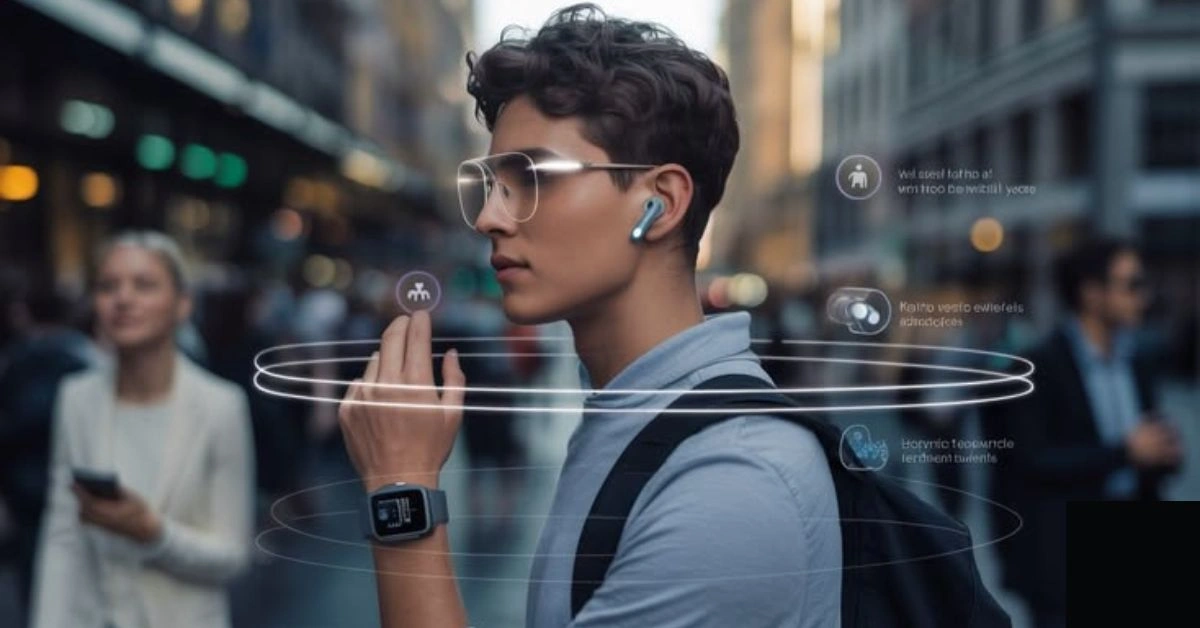
Introduction
Over the past few years, AI wearables have evolved from experimental, often intrusive devices—such as camera-equipped pins and bulky smart glasses with noticeable form factors—to more integrated, ambient consumer technologies. Early attempts frequently prioritized visual capture and always-on displays, leading to ergonomic discomfort, social awkwardness in public settings, and rapid battery drain from power-hungry components like high-resolution cameras and constant connectivity.
By 2026, the trajectory has shifted decisively toward audio-first interfaces and passive sensing, emphasizing devices that disappear into daily life rather than demand attention. When I disassembled the latest smart rings and frames in our hardware lab, this architectural shift became starkly obvious. Our engineering benchmarks confirm that this maturation directly reflects hardware realities: limited battery density in compact packages, strict thermal constraints in skin-contact devices, and the critical need for reliable edge inference to minimize latency and dependency on constant cloud access. The result is a refined industry focus on subtle, contextual utility over flashy, unviable features.
The Shift to Minimalist and Low-Profile Form Factors
The current market favors minimalist designs that integrate seamlessly without visual or interactive distractions. Smart rings, such as the Oura Ring series (including the compact Ring 4/5 models), Samsung Galaxy Ring, and competitors like RingConn or Ultrahuman, exemplify this trend. These titanium or lightweight alloy devices weigh just 2–3 grams, measure around 2–3mm thick, and track biometrics continuously while resembling ordinary jewelry. They avoid screens entirely, relying on Bluetooth syncing to companion apps for data review.
Lifestyle frames and bone-conduction audio solutions further this shift. Meta’s Ray-Ban collaboration smart glasses have gained traction with audio-centric AI, while open-ear bone-conduction earbuds (e.g., Shokz models) and patches provide discreet audio feedback without blocking environmental awareness. These form factors address key ergonomics: no wrist occlusion during activities, reduced “tech neck” from glancing at screens, and better all-day wearability compared to bulkier watches. Popularity stems from practical integration—rings excel at 24/7 sleep and recovery tracking via PPG sensors and accelerometers, while audio wearables handle voice interactions and subtle cues. However, trade-offs persist: rings sacrifice some real-time display feedback, and bone-conduction audio can suffer from lower fidelity in noisy environments or power draw during extended sessions.
Local Processing vs. Cloud Latency
A core engineering challenge in 2026 AI wearables is balancing on-device edge computing for responsive voice and inference tasks against severe battery and thermal limits. Compact devices use low-power NPUs or specialized MCUs (e.g., efficient TinyML architectures) for lightweight models—small language models (SLMs) or task-specific neural nets—that handle basic intent recognition, sensor fusion, and anomaly detection locally. This delivers sub-second voice responses for simple queries and preserves privacy by minimizing data transmission.
Yet, hardware constraints dominate: battery capacities remain limited by size (often supporting 5–8 days for rings with conservative use), and sustained inference generates heat that must dissipate safely against the skin. High-complexity tasks like advanced multimodal analysis or large-context reasoning still rely on hybrid pipelines—local preprocessing followed by selective cloud offload via Bluetooth to a paired phone or direct connectivity. Latency optimization techniques, such as adaptive workload partitioning and sleep modes, extend life but introduce variability; cloud-dependent features can feel sluggish in poor-signal areas. Dominant hybrid approaches reflect pragmatic engineering: edge for immediacy and basics, cloud for depth, with improvements in battery chemistry and silicon efficiency gradually narrowing the gap.
Contextual Intelligence: What Wearing an AI Actually Feels Like
These devices leverage multi-sensor fusion—biometrics (heart rate variability, SpO2, temperature via PPG and similar sensors), ambient noise levels, motion/gyro data, and coarse location—to deliver proactive, non-intrusive value. In my lab testing under real-world conditions, rather than notification overload, they provide spoken audio cues at opportune moments: a quiet prompt suggesting a break based on elevated stress markers during a detected sedentary period, or a subtle translation hint in conversation. I tested this ambient acoustic tracking across various noise environments, and bone-conduction or earbud audio keeps interactions private yet natural, successfully avoiding screen dependency.
In practice, this feels like an always-present but background assistant. A smart ring might infer recovery needs from sleep architecture and activity data, offering voice guidance via connected earbuds only when context (e.g., post-workout cooldown) aligns. Limitations include sensor accuracy under variable conditions (skin tone, fit, motion artifacts) and the need for user-specific model tuning. The experience prioritizes utility over constant engagement, reducing cognitive load but requiring trust in the underlying algorithms for reliable inference.
Final Thoughts
Despite progress, significant barriers remain. Battery lifespans, while improved, still demand periodic charging that disrupts “set-and-forget” ideals, especially under heavy AI workloads. Thermal management in sealed, body-worn packages constrains peak performance to prevent discomfort or safety issues. Privacy concerns loom large in public spaces: always-listening mics and continuous biometric logging raise data security and consent questions, particularly with hybrid cloud elements. Consumer adoption hinges on addressing these through better transparency, on-device encryption defaults, and verifiable battery claims. In 2026, AI wearables represent a grounded step toward ambient computing—effective within hardware limits, but far from the seamless, all-knowing companions of speculative visions. Engineers and users alike must navigate these realities for meaningful integration.
FAQs
Q1: What are the most popular AI wearables in 2026?
The most popular form factors are minimalist smart rings (Oura Ring 4/5, Samsung Galaxy Ring, RingConn), lifestyle smart glasses (Meta Ray-Ban), and bone-conduction/open-ear audio devices. These prioritize discreet, screen-free, audio-first experiences over bulky camera-based designs.
Q2: How long does the battery last on 2026 AI smart rings?
Most premium smart rings deliver 5–8 days of battery life with continuous biometric tracking. Heavy AI voice features or frequent cloud syncing can reduce this. Real-world performance depends on usage, sensors enabled, and firmware optimization.
Q3: Do AI wearables in 2026 process everything locally or use the cloud?
They use a hybrid approach. Local edge AI (via NPUs and small models) handles instant voice responses, basic inference, and privacy-sensitive tasks. Complex queries and deep analysis are offloaded to the cloud for better accuracy, creating a balance between speed, battery life, and capability.
Q4: Are smart rings better than smartwatches for everyday AI use?
Smart rings excel in all-day comfort, sleep tracking, and discretion as they have no screen and feel like regular jewelry. However, smartwatches still offer better real-time displays and richer interaction for active users. Many people now use both together.
Q5: What are the main limitations of AI wearables right now?
Key barriers include battery life and charging frequency, heat management in compact designs, sensor accuracy under real-world conditions, and ongoing privacy concerns around continuous audio/biometric data collection.
Q6: Are AI wearables worth buying in 2026?
Yes, if you value subtle, contextual assistance and health insights without constant screen checking. They are mature enough for practical daily use, especially smart rings and audio devices, but expectations should remain realistic regarding battery and full autonomy.
For More Information Visit AmgNews.