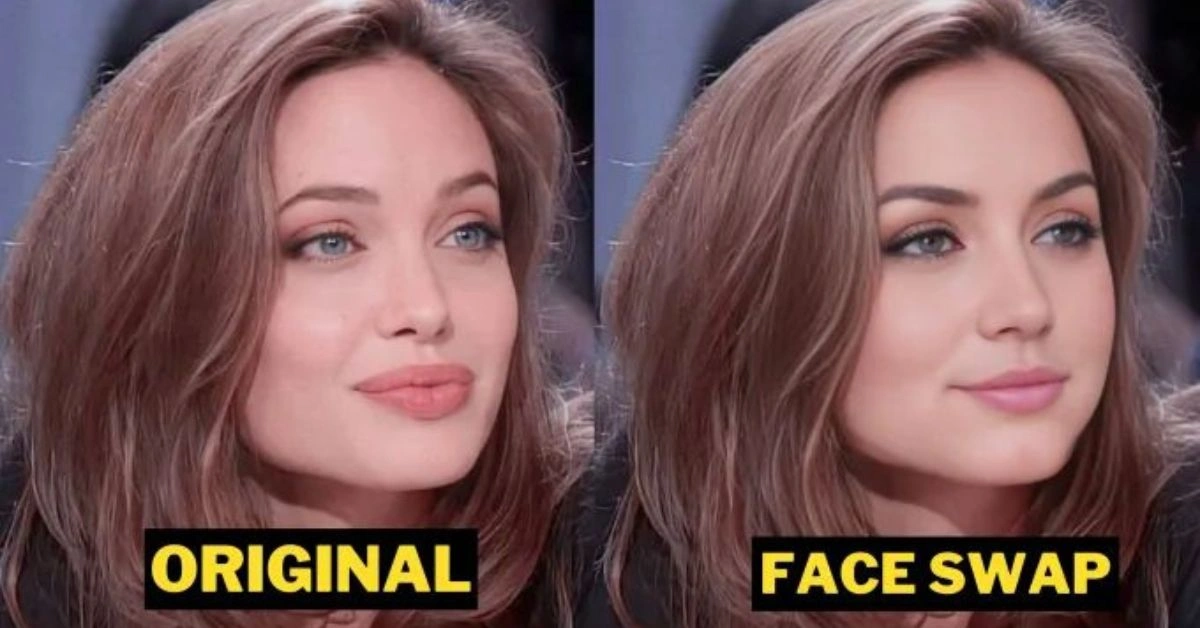
Face swap technology has evolved dramatically from rudimentary visual filters and manual photo editing to sophisticated deep learning systems capable of real-time, seamless facial mapping. What began as novelty effects in social media apps has become a powerful tool with applications across entertainment, marketing, and beyond—while simultaneously raising profound questions about privacy, consent, and the integrity of digital media.
Early attempts at face manipulation relied on basic image processing techniques, often producing unnatural or cartoonish results that required significant manual effort in tools like Photoshop. The turning point came with advances in deep learning around the mid-2010s, particularly the rise of accessible consumer hardware and open datasets of facial images. By 2017, the emergence of “deepfakes” marked a milestone, leveraging neural networks to create hyper-realistic swaps that preserve expressions, lighting, and head movements with remarkable fidelity.
Today’s systems can operate in real time on consumer devices, transforming personal videos or enabling dynamic content creation. This progression reflects broader AI advancements but also underscores a critical duality: face swap AI as both an engine of creativity and a potential vector for harm.
How Modern Face Swap AI Operates
At its core, modern face-swapping relies on two powerhouse technologies: Autoencoders and Generative Adversarial Networks (GANs). Think of an Autoencoder as a digital sculptor that compresses a face into a universal code and then decompresses it onto another head. GANs, on the other hand, work like an art dueling ground: one AI (the Generator) creates a fake face, while its rival AI (the Discriminator) tries to spot the flaws. They back-and-forth until the fake looks indistinguishably real.
Autoencoders work by compressing a face into a lower-dimensional representation—essentially encoding key attributes like expression, pose, and landmarks (points around eyes, nose, mouth, and jaw)—and then decoding it back. In face swapping, a shared encoder learns general facial structures from large datasets, while separate decoders specialize in reconstructing specific identities. This allows the system to take the encoded “essence” (expression and movement) from one face and apply the identity characteristics of another.
GANs build on this by introducing a competitive dynamic: a generator creates swapped faces, while a discriminator evaluates how realistic they appear compared to real images. Through iterative training, the generator improves until outputs are nearly indistinguishable from authentic footage. Modern implementations often combine these with facial landmark detection for precise alignment, 3D structure inference for better handling of angles and lighting, and post-processing steps like blending and restoration to eliminate artifacts.
The result is technology that not only swaps identities but maintains temporal consistency in video—ensuring blinks, smiles, and speech align naturally. While accessible tools have democratized this capability, the underlying models require substantial computational resources and diverse training data for high quality.
Commercial and Creative Use Cases
When used responsibly with consent, face swap AI offers significant value in professional contexts.
In Hollywood and film production, it enables de-aging actors, digital resurrection of performers for legacy roles, or seamless visual effects without extensive CGI. Examples include recreating younger versions of characters or completing scenes with deceased actors, reducing costs and time while expanding creative possibilities.
The advertising industry benefits from hyper-localized campaigns. Brands can film a single video and swap in culturally appropriate faces or actors tailored to regional audiences, improving relevance and engagement while minimizing production expenses. This extends to hyper-personalized marketing, where consumers might see themselves or relatable avatars in product demonstrations.
Video game development leverages the technology for character customization, dynamic NPC interactions, or prototyping animations. It allows developers to create more immersive experiences by mapping player likenesses or generating varied character appearances efficiently.
Broader creative applications include virtual makeup trials, educational content, and entertainment filters that prioritize fun and user control. These legitimate uses highlight AI’s potential to enhance storytelling and accessibility when grounded in ethical practices.
The Dark Side: Security, Deepfakes, and Consent
Despite its promise, face swap AI poses serious risks, particularly when deployed without consent or safeguards.
The most pressing concern is the proliferation of deepfakes—realistic manipulated media used for misinformation. Fabricated videos can depict public figures saying or doing things they never did, eroding trust in news and institutions. On a personal level, non-consensual swaps fuel identity theft, harassment, and explicit content creation, violating privacy and causing significant emotional harm.
Security implications extend to identity verification systems. Deepfake-driven face swaps have surged in attempts to bypass facial recognition, liveness detection, and remote KYC processes, enabling fraud in banking, corporate access, and even large-scale financial scams. Reports document attacks rising sharply, with sophisticated actors combining swaps with voice cloning or injection methods.
Consent lies at the heart of these issues. Training data often scrapes public images without permission, and outputs can be weaponized rapidly. This has prompted a counter-effort: advanced detection tools that analyze for inconsistencies in lighting, blinking patterns, temporal artifacts, or use AI classifiers trained on synthetic media. Techniques like watermarking, blockchain-based provenance, and multimodal forensics (examining audio-visual alignment) are emerging, though the arms race continues as generation methods evolve.
Platforms and regulators increasingly emphasize detection and removal policies, but enforcement remains challenging in an open internet.
Conclusion
Face swap AI exemplifies technology’s dual nature: a catalyst for innovation in creative industries and a threat to digital trust and personal security. Realizing its benefits while mitigating harms requires proactive, responsible frameworks.
Developers and platforms should prioritize consent mechanisms, robust watermarking, and transparent usage policies. Policymakers, technologists, and civil society must collaborate on standards for detection, ethical training data practices, and legal protections against misuse. Individuals, meanwhile, benefit from heightened media literacy—approaching viral content with healthy skepticism—and tools that empower control over their digital likeness.
Ultimately, protecting digital identities demands a balanced ecosystem where innovation thrives alongside accountability. By investing in detection, governance, and ethical design, we can steer face swap technology toward constructive applications that enrich rather than undermine society.
For More Information Visit AmgNews.