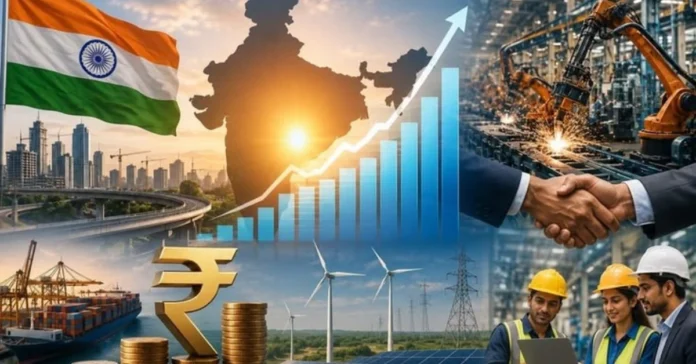


India’s power sector stands at a critical juncture. With the economy expanding and electricity demand surging, the country has built one of the world’s largest electricity systems while accelerating its shift toward renewables. As of mid-2026, total installed generation capacity hovers around 530-542 GW, reflecting steady additions across sources.
Coal remains the backbone of actual generation, contributing roughly 70% of electricity supplied in recent periods despite its declining share of capacity. Non-fossil sources, including large hydro, now exceed 50% of installed capacity—a milestone achieved ahead of the 2030 Paris Agreement target. Solar leads renewable growth, followed by wind, while nuclear and gas play supporting roles. Peak demand has repeatedly hit records near 270-271 GW during the 2026 summer, managed without widespread national blackouts, though state-level strains persist.
This mix highlights both progress and tension. Rapid capacity growth has outpaced some infrastructure, creating integration challenges even as policy focuses on system-wide modernization rather than sheer megawatts added.
The Green Transition
India continues its aggressive push into renewables. By early 2026, non-fossil capacity surpassed fossil fuels for the first time, with renewables (excluding large hydro in some counts) driving much of the momentum. Solar installations have crossed significant thresholds, with annual additions setting records—around 24 GW in one recent year alone—and cumulative solar exceeding 100 GW earlier. Wind capacity stands near 56 GW, supported by repowering and hybrid projects.
The government eyes 500 GW of non-fossil capacity by 2030, with forecasts suggesting nearly 300 GW of renewable additions between 2026 and 2030. Between 2026-2030, solar PV is projected to meet about half of additional demand growth, with wind, hydro, nuclear, and gas filling the rest. Electricity demand is expected to grow at an average 6.4% annually through 2030.
Storage infrastructure gains traction as a key enabler. Battery Energy Storage Systems (BESS) are moving from pilots to larger tenders, recognized as an independent asset class with viability gap funding. Green hydrogen initiatives under the National Green Hydrogen Mission show early signs of life, with small-scale capacity commissioned, though scaling to the 5 million metric tonnes per annum target by 2030 remains ambitious and likely to fall short in full. Associated renewable capacity needs for hydrogen could add tens of GW if costs align.
These efforts align with broader goals, including potential upward revisions to targets if demand growth holds. The transition emphasizes not just deployment but integration—pairing variable renewables with flexible resources to maintain reliability.
Infrastructure and Grid Stability
Strong generation capacity masks weaknesses downstream. The national grid, the world’s largest synchronous system, exceeds 500,000 circuit kilometers of transmission lines as of early 2026. Plans call for expansion to support peak demand of 458 GW by 2032, with investments around ₹9.15 lakh crore for transmission and related works. New corridors, substations, and transformation capacity aim to move power from renewable-rich regions to load centers.
Yet gaps persist. In Q1 2026, India curtailed around 300 GWh of renewable energy due to transmission constraints. Many planned transmission projects face delays, with only about 80% of recent annual targets met. State distribution companies (DISCOMs) bear much of the burden: financial stress, high aggregate technical and commercial losses, and outdated networks limit their ability to absorb and pay for renewable power. Evening peaks and seasonal variability add pressure, even as the bulk grid handles record loads.
Modernization efforts include smart metering, advanced infrastructure, and better demand management. Success here will determine whether renewable growth translates into actual system decarbonization or remains constrained by evacuation and offtake issues. Reforms to DISCOM finances—such as improved fixed-cost recovery in tariffs—could unlock investment in feeders, transformers, and integration tools.
Investment Landscape
The power sector draws substantial capital, with total FDI inflows since 2000 reaching significant levels—over $19 billion in one long-term tally, and non-conventional energy seeing strong interest. 100% FDI is permitted under the automatic route for most segments, excluding nuclear, helping attract international players. In recent years, FDI in renewables has grown notably, with clean energy capturing the lion’s share of power investments.
Domestic players, including large conglomerates, commit tens of billions toward renewables, storage, and green hydrogen. Overall sector investment needs run into trillions of rupees over the coming decade for generation, transmission, distribution, and flexibility. Thermal additions continue, with plans for new coal capacity, but capital increasingly flows toward cleaner sources. Foreign portfolio flows have fluctuated, yet the long-term trend supports diversification.
Challenges include land acquisition, right-of-way issues for transmission, and ensuring bankable power purchase agreements amid DISCOM finances. Policy stability and project execution will shape whether inflows match ambitions.
Thermal (Coal) vs Renewable Energy Infrastructure Growth Trajectories (2026 Snapshot)
| Metric | Thermal (Coal) | Renewables (Solar/Wind Focus) |
| Current Share (Capacity) | ~42-46% (approx. 229 GW coal out of ~533 GW total) | >50% non-fossil overall; solar ~28%, wind ~11% |
| Investment Inflow Trends | Continued additions (plans for ~100 GW new over years); Rs. 2.3 lakh crore targeted by 2027-28 | Record additions; majority of new power investment; strong FDI in non-conventional |
| Major Operational Bottlenecks | Minimum technical load issues during high RE periods; fuel logistics; declining PLF pressure | Transmission curtailment (e.g., 300 GWh lost in Q1 2026); evening ramping needs; storage integration; DISCOM offtake |
The table underscores the diverging paths: coal provides baseload stability but faces operational strain from renewables’ variability, while renewables scale rapidly yet require heavy grid and flexibility support.
In summary, India’s power sector delivers reliable supply amid record demand while reorienting toward a greener mix. Success in the coming years hinges on closing infrastructure gaps, strengthening DISCOMs, and scaling storage and transmission at pace with generation. The stakes are high for economic growth, energy security, and climate goals in South Asia’s largest economy.
FAQS on India’s Power Sector
Q1: What is India’s total power capacity right now?
Around 530-542 GW as of mid-2026. Non-fossil sources (renewables + hydro + nuclear) crossed 50% of installed capacity, ahead of the 2030 target.
Q2: How much electricity comes from coal versus renewables?
Coal still generates the majority—around 60-70% of actual power supplied. Renewables contribute growing shares in capacity but less in generation due to variability. Solar and wind lead additions.
Q3: Is the green transition on track?
Yes on capacity—record solar additions and storage pilots are underway. Green hydrogen is starting small. The real test is grid integration and cutting curtailment.
Q4: What are the biggest challenges for DISCOMs?
Financial health, high losses, and outdated distribution networks. They struggle with payments and absorbing variable renewable power, causing local outages even when the national grid holds.
Q5: Where is investment flowing?
Heavy into renewables, storage, and transmission. FDI is rising in clean energy. Thermal additions continue but clean sources take most new capital. Total sector needs run into trillions of rupees over the decade.
Q6: Will India meet its 500 GW non-fossil target?
Already crossed 50% non-fossil capacity. Focus now shifts to actual generation share, storage, and grid modernization by 2030.
For More Information Visit AmgNews.