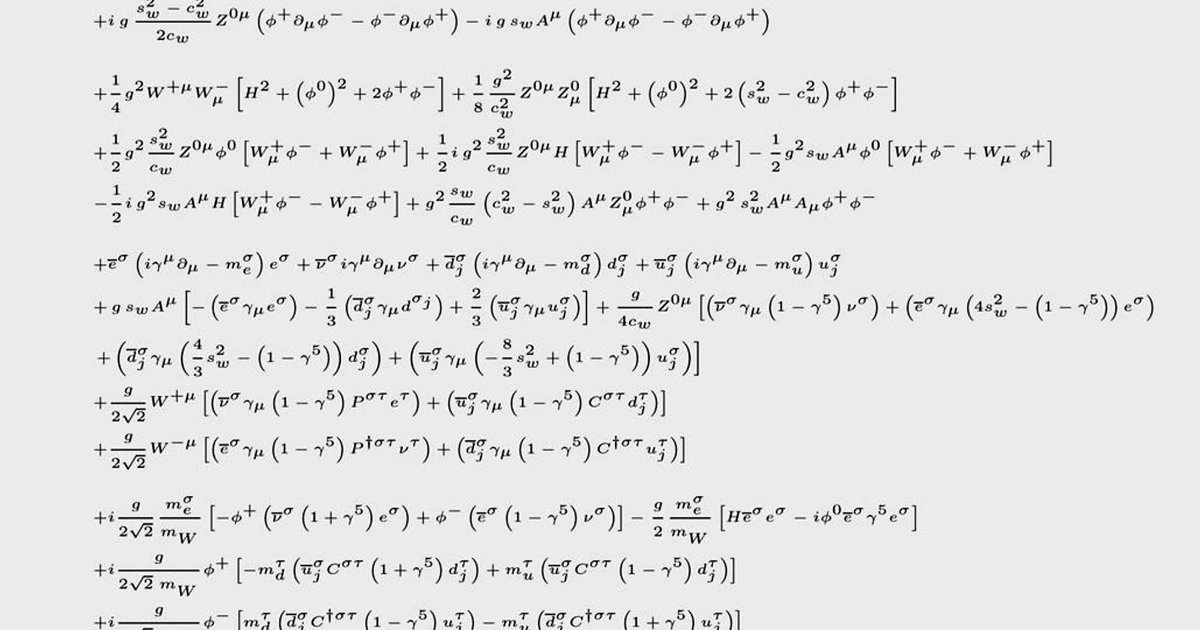

The connection between physics and artificial intelligence is one of the most important and least appreciated stories in modern technology. Many of the foundational ideas that make modern AI work, including the mathematics of neural networks, the statistical mechanics of learning, and the hardware architecture that runs large models, came from physics. Many of the most important researchers who developed the field were trained as physicists. And many of the current limitations of AI, including energy consumption, interpretability, and the gap between pattern matching and understanding, are problems that physics is uniquely positioned to address.
This article traces the connection between physics and AI from the early theoretical work to the current state of the field, and considers what physics can and cannot contribute to the next phase of AI development.
Where the Connection Begins
The connection between physics and AI begins in the 1940s, when the mathematical framework for thinking about computation and learning was being developed by researchers including Warren McCulloch, Walter Pitts, and John von Neumann. The first models of artificial neurons were inspired by simplified models of biological neurons, but the mathematical structure of those models was directly related to work in mathematical logic and statistical physics.
The 1980s brought a wave of physicists into the field of neural networks. The most famous example is John Hopfield, whose Hopfield network is a foundational model in machine learning. Hopfield’s background in condensed matter physics informed his approach to thinking about neural networks as physical systems, and his work helped establish the connection between statistical mechanics and learning that has continued to influence the field.
Statistical Mechanics and Learning
Statistical mechanics, the branch of physics that deals with the behavior of systems with many components, has been a particularly rich source of ideas for AI. The mathematics of statistical mechanics turns out to be directly relevant to the mathematics of learning. The same techniques that describe the behavior of disordered materials, including spin glasses, can be applied to describe the behavior of learning systems.
This connection has practical implications. The mathematical tools of statistical mechanics, including variational methods, mean-field theory, and replica methods, are used in the analysis of neural network training and in the development of new learning algorithms. The intellectual exchange between physics and machine learning is one of the most active areas of interdisciplinary research.
Hardware: Physics as the Foundation of Computing
Modern AI runs on hardware that is the product of decades of advances in condensed matter physics. The transistor, the integrated circuit, the GPU, and the specialized AI accelerators are all built on the physics of semiconductors. The exponential improvement in computing power, the trend that has made modern AI possible, is fundamentally a story of physics: smaller transistors, lower power, higher density, lower cost per operation.
Looking forward, the limits of current hardware are also becoming a physics problem. The continued miniaturization of transistors is approaching physical limits, and the energy consumption of large AI systems is a significant environmental and economic concern. New computing paradigms, including quantum computing, neuromorphic computing, and analog computing, are being explored as potential ways to extend the trajectory. All of these are fundamentally physics problems.
The Physics of Neural Networks
Neural networks can be analyzed as physical systems, and the resulting insights have practical value. The study of deep learning using methods from physics has produced important results on why deep networks work so well, on the geometry of the loss landscape, and on the role of overparameterization. The theoretical understanding of these phenomena is still incomplete, but the physics-based approaches have been among the most productive lines of inquiry.
The concept of universality in deep learning is another physics-derived idea. In statistical physics, universality describes the way systems with very different microscopic details can have very similar macroscopic behavior. Analogous ideas have been explored in deep learning, where networks with different architectures and training procedures often show similar behavior on similar tasks. The understanding of these phenomena is still developing, but the physics-based perspective has been useful.
AI for Physics
The connection goes in both directions. AI is now being used in physics research, including in the analysis of data from particle physics experiments, in the discovery of new materials, in the simulation of complex physical systems, and in the search for patterns in astronomical data. The same tools that power commercial AI applications are now standard equipment in many physics laboratories.
The most exciting applications are in areas where the traditional methods of physics have hit limits. Many-body quantum systems, turbulent fluid flows, and the dynamics of complex materials are all problems where direct simulation is intractable, and where AI-based approaches are showing real promise. The interplay between AI and physics research is now a substantial part of the scientific landscape.
What Physics Can Contribute to the Next Phase of AI
Several of the most important open problems in AI are fundamentally physics problems. The energy consumption of large AI systems is a thermodynamic and engineering problem. The interpretability of neural networks is partly an information-theoretic problem that connects to deep questions about the nature of computation. The gap between pattern matching and genuine understanding is a question about the nature of intelligence that physics, philosophy, and cognitive science all have contributions to make.
Specific contributions that physics can make include: the development of more energy-efficient hardware, the theoretical understanding of why deep networks generalize, the development of new computing paradigms that go beyond current silicon technology, and the application of rigorous mathematical tools to the analysis of AI systems. None of these contributions is guaranteed, but the historical track record of physics-based approaches to AI problems is strong.
What Physics Cannot Contribute
Physics alone cannot solve the social, ethical, and practical challenges of AI deployment. The question of how AI should be used, how it should be regulated, how it affects employment, and how it interacts with human values are not physics problems. They are problems for the social sciences, the humanities, the law, and the broader public discourse. Physics can contribute to the technical foundations, but the broader questions require broader engagement.
The Educational and Research Landscape
Many of the leading AI research groups are housed in physics departments, and many of the most important researchers in AI have physics backgrounds. This interdisciplinary environment has been productive, but it also creates challenges. The training in physics is rigorous but different from the training needed for AI research, and the most successful researchers typically combine deep knowledge of both fields.
For students interested in the field, the physics-AI connection is a strength. A strong foundation in physics, including statistical mechanics, condensed matter, and computational physics, provides an excellent preparation for AI research. The combination of physics thinking and AI tools is increasingly valuable in both academic research and industrial applications.
Frequently Asked Questions
Why are physicists involved in AI?
The mathematical tools of physics, including statistical mechanics, information theory, and computational physics, are directly relevant to many problems in AI. Many of the foundational ideas in machine learning were developed by researchers trained in physics, and the exchange between the fields has continued to be productive.
What physics contributes to modern AI?
Physics contributes both theoretical foundations and practical tools. The mathematics of learning, the design of the hardware that runs AI systems, the analysis of neural network behavior, and the development of new computing paradigms all draw on physics. The contributions are both fundamental and practical.
Will AI solve fundamental physics problems?
AI is increasingly used in physics research, including in data analysis, simulation, and the search for new theories. The most likely outcome is that AI will become a standard tool in the physicist’s toolkit, accelerating the pace of discovery without necessarily replacing the role of human researchers in formulating questions and interpreting results.
Can physics explain how AI works?
Physics-based approaches have produced important insights into the behavior of neural networks, but the full theoretical understanding of how modern AI systems work is still incomplete. The field of theoretical machine learning is actively developing, and physics-based ideas remain some of the most productive avenues of inquiry.
Should AI researchers study physics?
For students interested in the theoretical foundations of AI, a strong physics background is valuable. For students focused on the practical applications of AI, the most important preparation is in computer science, statistics, and the specific application domain. The most successful AI researchers typically combine technical depth in one or more of these areas with broad intellectual curiosity.