

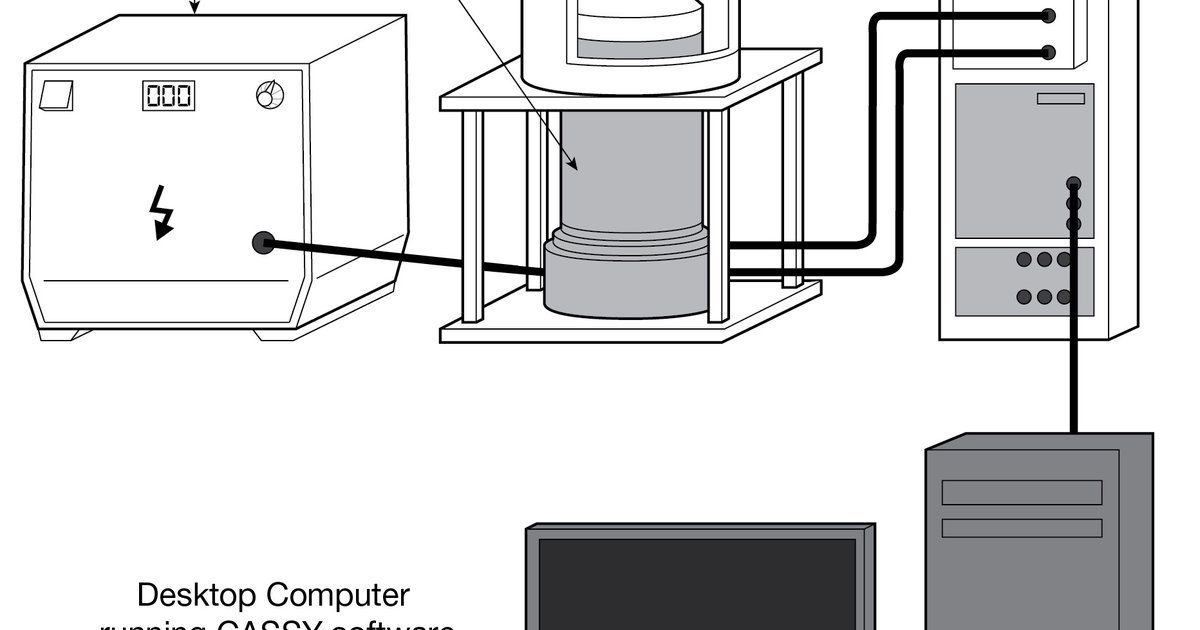

Scintillation sensors are radiation detection devices that produce a flash of visible light when ionizing radiation interacts with certain materials. The light pulse is then converted into an electrical signal by a photodetector, allowing the system to measure the energy, timing, and intensity of the radiation. Scintillation sensors are among the most widely used tools in radiation detection, with applications ranging from medical imaging and nuclear security to high-energy physics research, oil and gas exploration, and homeland security screening.
This article explains what a scintillation sensor is, how it works, the common scintillator materials, the photodetector technologies used, and the major application areas.
What a Scintillation Sensor Is
A scintillation sensor is a device that detects ionizing radiation by converting the energy deposited by the radiation into visible light, then converting that light into an electrical signal that can be measured and analyzed. The core components are the scintillator material, which produces the light, and the photodetector, which converts the light into an electrical signal. The rest of the system processes the signal to extract information about the radiation.
The basic principle has been understood for over a century, but the technology has evolved substantially with the development of new scintillator materials, advanced photodetectors, and digital signal processing. Modern scintillation sensors are far more capable, more compact, and more reliable than earlier generations, which has expanded the range of applications and the volume of deployment.
How Scintillation Works
When ionizing radiation, such as gamma rays, X-rays, or charged particles, passes through a scintillator material, it deposits energy through interactions with the atoms of the material. The deposited energy excites the atoms, which then de-excite by emitting visible or near-visible light. The light is emitted as a flash, or scintillation, with intensity proportional to the energy deposited by the radiation.
The light flash is typically very short, on the order of nanoseconds to microseconds depending on the scintillator material, and is collected by a photodetector placed in optical contact with the scintillator. The most common photodetectors are photomultiplier tubes (PMTs), silicon photomultipliers (SiPMs), and photodiodes. Each technology has its own characteristics in terms of sensitivity, timing resolution, size, and cost.
Common Scintillator Materials
Many materials exhibit scintillation, but only a subset are useful for practical applications. The most important properties are the light yield (how much light is produced per unit of deposited energy), the decay time (how quickly the light pulse rises and falls), the density and atomic number (which affect the probability of interaction with the radiation), and the wavelength of the emitted light (which must be compatible with the photodetector).
Sodium iodide doped with thallium, NaI(Tl), is one of the oldest and most widely used scintillators. It has a high light yield and is relatively inexpensive, making it a popular choice for general-purpose gamma ray detection. Its main limitations are its hygroscopic nature, which requires careful packaging, and its moderate energy resolution.
Cesium iodide doped with thallium, CsI(Tl), is mechanically more robust than NaI(Tl) and less sensitive to moisture, making it a popular choice for handheld instruments and applications where ruggedness matters. It has a higher density than NaI(Tl), which gives it better efficiency for higher-energy gamma rays.
High-purity germanium is not a scintillator but a semiconductor detector. It is mentioned here because it is often discussed alongside scintillators and offers significantly better energy resolution for gamma ray spectroscopy. The trade-off is that germanium detectors must be cooled, typically with liquid nitrogen, which limits their practicality for some applications.
Plastic scintillators are based on organic scintillating materials embedded in a plastic matrix. They are inexpensive, easy to fabricate in large volumes and complex shapes, and have fast timing characteristics. Their main limitation is lower density and lower atomic number, which makes them less efficient for detecting high-energy gamma rays. They are widely used for charged particle detection, neutron detection (with appropriate converters), and large-area applications.
Newer scintillator materials, including cerium-doped lanthanum bromide, cerium-doped lutetium oxyorthosilicate, and various other halide and oxide compounds, offer improved energy resolution, faster timing, or better efficiency for specific applications. These materials are more expensive than the traditional choices but are increasingly used where their specific advantages matter.
Photodetector Technologies
Photomultiplier Tubes (PMTs)
PMTs are the traditional photodetector for scintillation sensors. They offer high gain, low noise, and excellent timing characteristics. Their main limitations are their size, their sensitivity to magnetic fields, and their need for high-voltage power supplies. PMTs remain the standard for many high-performance applications.
Silicon Photomultipliers (SiPMs)
SiPMs are solid-state devices that offer PMT-like performance in a much more compact package. They are immune to magnetic fields, operate at low voltages, and have gained rapid adoption in recent years. Their main limitation is a smaller active area than typical PMTs, which requires careful optical design in some applications.
Photodiodes
Photodiodes, including PIN photodiodes and avalanche photodiodes, are used in applications where compactness and low power are important. They have lower gain than PMTs or SiPMs, which limits their use to applications with brighter scintillators or relaxed signal-to-noise requirements.
How the Signal Is Processed
The electrical signal from the photodetector is typically processed in several stages. Preamplifiers integrate the current pulse from the photodetector to produce a voltage pulse. Shaping amplifiers filter and amplify the pulse to optimize the signal-to-noise ratio and prepare the signal for analysis. Analog-to-digital converters digitize the shaped pulse, and digital signal processing extracts the energy, timing, and other parameters of the original radiation event.
For spectroscopy applications, where the energy of the incident radiation is the primary measurement, the pulse height analysis produces an energy spectrum that can be used to identify the radioactive isotopes present. For timing applications, where the time of arrival is the primary measurement, constant-fraction discriminators and time-to-digital converters produce precise timing information.
Major Application Areas
Scintillation sensors are used in a remarkably wide range of applications. Medical imaging, including PET scanners and gamma cameras, uses scintillation sensors to detect the gamma rays produced by radioactive tracers in the body. Nuclear security and homeland security use scintillation sensors to detect radioactive materials at ports, borders, and critical infrastructure. Industrial gauging uses scintillation sensors to measure thickness, density, and level in manufacturing processes. Oil and gas exploration uses scintillation sensors in well logging to characterize subsurface formations.
High-energy physics experiments use scintillation sensors for particle detection and timing. Space science uses scintillation sensors for cosmic ray detection and planetary missions. Radiation protection and environmental monitoring use scintillation sensors for dose rate measurement and contamination surveys. The breadth of applications reflects the versatility and reliability of the technology.
What to Consider When Choosing a Scintillation Sensor
The right sensor depends on the specific application. The radiation type (gamma, X-ray, charged particle, neutron) and energy determine the appropriate scintillator material. The required energy resolution, timing resolution, and detection efficiency drive the choice of photodetector. The form factor, power consumption, and environmental requirements (temperature, vibration, magnetic field tolerance) affect the practical design.
For most applications, working with an established manufacturer or a knowledgeable consultant is the right approach. The choice of scintillator and photodetector, the optical coupling between them, and the signal processing all interact in ways that are not always obvious from the datasheets. A properly designed system will deliver reliable performance over years of operation; a poorly designed one may work initially but produce inconsistent results.
Frequently Asked Questions
What is a scintillation sensor?
A scintillation sensor is a radiation detection device that produces a flash of visible light when ionizing radiation interacts with a scintillator material, then converts that light into an electrical signal using a photodetector.
What radiation can a scintillation sensor detect?
Scintillation sensors can detect gamma rays, X-rays, charged particles (such as alpha and beta particles), and neutrons (with appropriate converter materials). The specific scintillator and photodetector combination determines the radiation types and energies that can be effectively detected.
What is the most common scintillator material?
Sodium iodide doped with thallium, NaI(Tl), is one of the most widely used scintillator materials, particularly for general-purpose gamma ray detection. Other common materials include cesium iodide, plastic scintillators, and various newer halide and oxide compounds.
What is the difference between a scintillation sensor and a Geiger counter?
A Geiger counter detects radiation and produces a count rate, but it does not measure the energy of the radiation. A scintillation sensor can measure both the count rate and the energy of the radiation, making it useful for spectroscopy and isotope identification.
Are scintillation sensors safe to use?
Scintillation sensors are passive detection devices that do not emit radiation. They are safe to use in a wide range of environments, including medical, industrial, and security applications, when operated according to the manufacturer’s instructions.
