Ethereum Gas Fees Are Calm: What Lower Network Costs Mean for Users
Lower Ethereum transaction costs can improve user experience, but they also reveal useful information about network demand and activity.
In this article
Quick answer: Calm Ethereum gas fees generally make swaps, transfers and smart-contract interactions easier to price. They can also indicate that blockspace demand is moderate, so users should still check the final fee, contract risk and network congestion before signing a transaction.
Gas is the execution cost paid to process activity on Ethereum. It changes with demand for blockspace, transaction complexity and the urgency users attach to settlement. A low-fee window is useful, but it is not a guarantee that a transaction is safe or that network activity will stay quiet.
Why gas fees move
Simple transfers usually require less computation than swaps, NFT actions or complex DeFi transactions. When many users compete for limited blockspace, fee bids rise. When demand cools, the same action can become cheaper. The number visible in a wallet is an estimate, so the final amount can still change before confirmation.
What calmer fees can signal
- Better user access: Smaller transactions become less expensive to test and settle.
- More predictable planning: Apps and traders can estimate execution costs with less slippage from congestion.
- Moderate demand: Quiet fees may mean users are not competing aggressively for blockspace at that moment.
What gas does not tell you
Gas alone cannot confirm that Ethereum is healthy, that a token is legitimate or that a trade will be profitable. Smart-contract permissions, liquidity, price impact and bridge risk matter just as much. A cheap transaction can still interact with a malicious contract.
AMG checklist before signing
Confirm the network, review the recipient address, read the wallet simulation where available and inspect token approvals. Users should avoid rushing simply because a fee appears low. Cost efficiency is valuable only when the transaction itself is understood.
FAQ
Can low gas fees suddenly rise?
Yes. A popular mint, market move or burst of on-chain activity can increase demand quickly.
Are low fees a buy signal?
No. Gas is a network-cost metric, not a standalone investment signal.
Related reporting
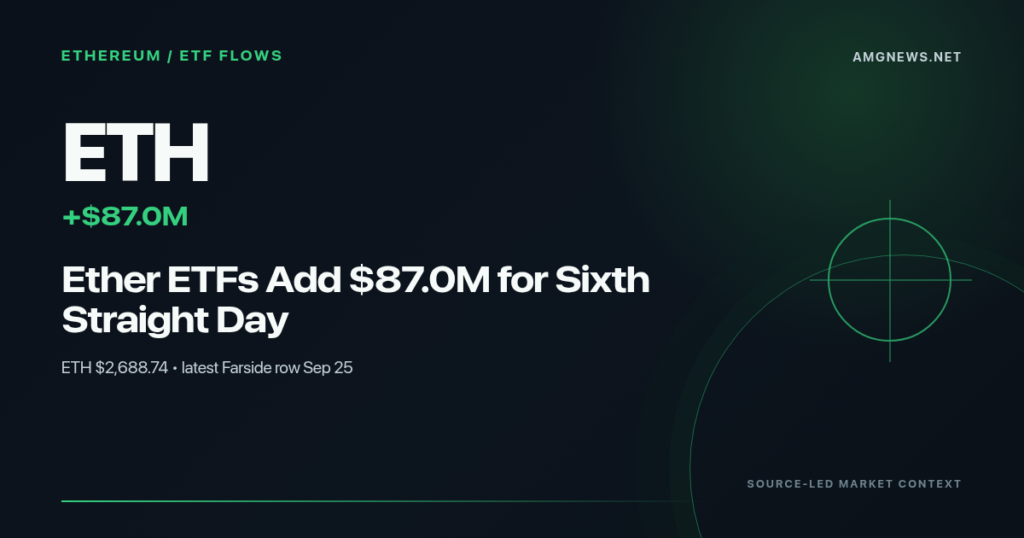
Ether ETFs Add $87.0M for Sixth Straight Day
September 25 inflows continue U.S. spot Ether ETFs recorded $87.0 million of net inflows for September 25, the latest row in Farside...
Dogecoin Market Analysis: Liquidity, Sentiment, and Utility
Key takeaway: Dogecoin market analysis should separate attention from evidence. Liquidity, network activity, market breadth, and volatility can be measured; sentiment can...
TRUMP Token Analysis: Volatility, Supply, and Market Risk
Key takeaway: TRUMP token analysis should begin with identity and data quality, not branding. Verify the contract, supply, holders, liquidity, disclosures, and...
