What Is MEV in Crypto? A Beginner-Friendly Explainer
MEV is value extracted from transaction ordering and block production. Learn about frontrunning, sandwich attacks, arbitrage and user protections.
In this article
Quick answer: MEV, or maximal extractable value, is value created by choosing, ordering or inserting transactions in a block. It can include arbitrage and liquidations, but users may also face frontrunning and sandwich attacks that worsen execution.
MEV is a market-structure concept. It does not mean every validator or trader is acting illegally; it describes how transaction order can create economic value.
Common MEV examples
- Arbitrage: buying on one venue and selling on another when prices differ.
- Liquidations: capturing incentives when collateral becomes unsafe.
- Frontrunning: placing a transaction before a visible user order.
- Sandwiching: trading before and after a user swap to profit from price impact.
Why users should care
MEV can increase slippage, change execution price and make public mempool transactions attractive targets. The effect depends on the chain, application, order size and protection available through the wallet or route.
Practical protections
Use realistic slippage limits, avoid oversized trades in thin pools, compare private or protected execution where available and review the final quote before signing. Protection tools have their own trust assumptions, so read the route details.
FAQ
Is all MEV harmful?
No. Arbitrage can improve price alignment and liquidations can keep lending markets solvent, while some extraction harms users.
Can gas fees prevent MEV?
Gas affects competition but does not remove the opportunity created by transaction visibility and ordering.
Related reporting
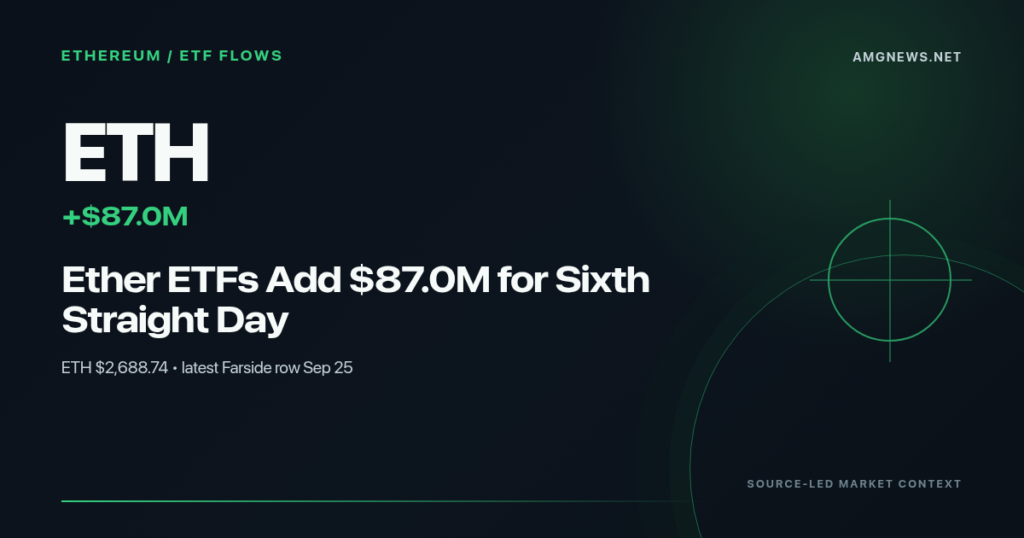
Ether ETFs Add $87.0M for Sixth Straight Day
September 25 inflows continue U.S. spot Ether ETFs recorded $87.0 million of net inflows for September 25, the latest row in Farside...
Ethereum Gas Fees Are Calm: What Lower Network Costs Mean for Users
Lower Ethereum transaction costs can improve user experience, but they also reveal useful information about network demand and activity.
How to Check a Token Contract Address Before Buying
Contract-address checks can prevent fake-token mistakes. This AMG News walkthrough covers official sources, explorers, liquidity, permissions and network matching.
