What Is Restaking in Crypto? Rewards, Reuse and Risk Explained
Restaking reuses staked assets to help secure additional services. Learn how it differs from normal staking and why extra rewards add extra risk.
In this article
Quick answer: Restaking allows an already staked asset or liquid staking token to provide security to additional services. It can create another reward stream, but it also introduces more contract dependencies, operator risk, slashing conditions and liquidity complexity than basic staking.
The appeal is capital efficiency: one asset may secure more than one system. The trade-off is that one failure can affect several layers.
Restaking versus staking
Normal staking supports the base network’s consensus. Restaking extends economic security to other services, such as middleware or data systems, under defined rules. The exact design depends on the protocol and operator set.
Where the extra risk appears
- Additional smart contracts and upgrade keys.
- More slashing or penalty conditions.
- Operator concentration and correlated failures.
- Liquid staking token discounts during stress.
- Rewards that depend on future token emissions.
Questions before participating
Read the service rules, withdrawal process, operator selection and penalty model. Check whether risks are isolated or shared. Do not assume a familiar staking token makes every restaking strategy safe.
AMG News view
Restaking is a technical risk-reward design, not a guaranteed yield upgrade. Participants should understand the downside path before comparing advertised rewards.
FAQ
Does restaking create free yield?
No. Additional rewards compensate participants for additional responsibilities and risks.
Can liquid restaking tokens lose their peg?
Yes. Market liquidity, withdrawal queues and confidence can affect their price.
Related reporting
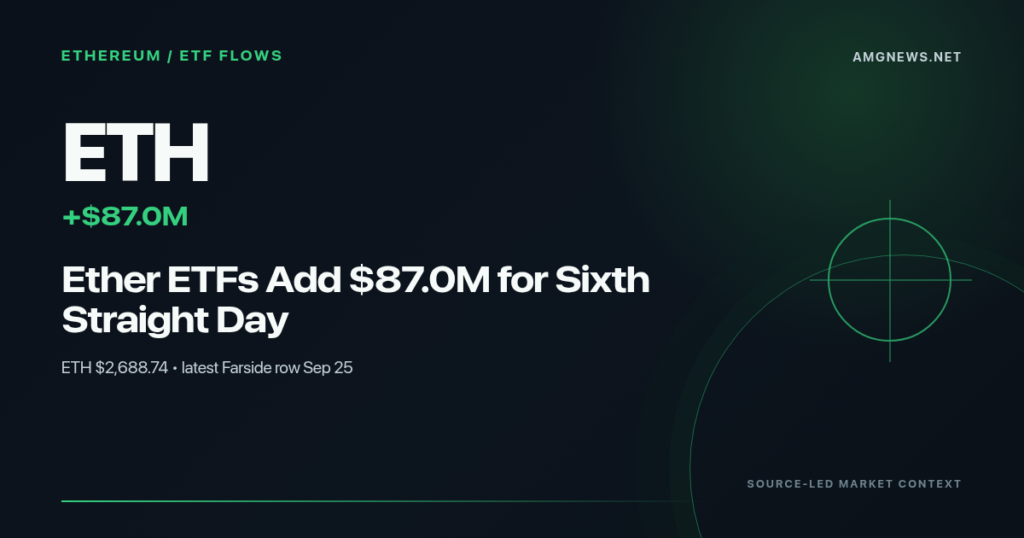
Ether ETFs Add $87.0M for Sixth Straight Day
September 25 inflows continue U.S. spot Ether ETFs recorded $87.0 million of net inflows for September 25, the latest row in Farside...
Ethereum Gas Fees Are Calm: What Lower Network Costs Mean for Users
Lower Ethereum transaction costs can improve user experience, but they also reveal useful information about network demand and activity.
How to Check a Token Contract Address Before Buying
Contract-address checks can prevent fake-token mistakes. This AMG News walkthrough covers official sources, explorers, liquidity, permissions and network matching.
