
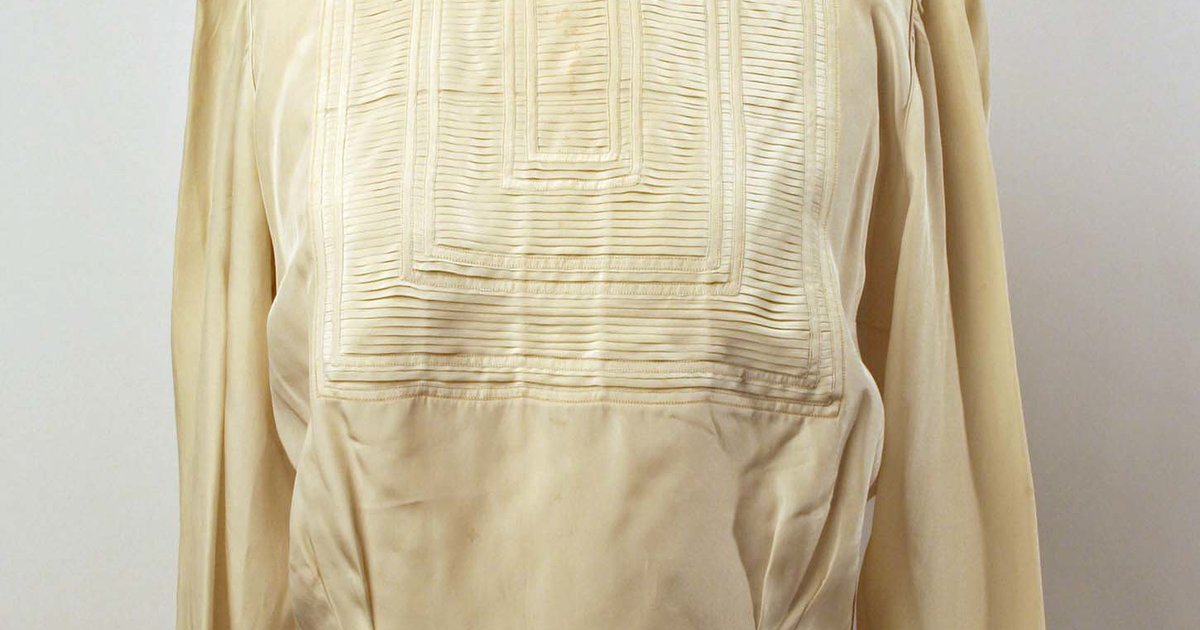

A truly luxury blouse is one of the most personal pieces in a woman’s wardrobe. It can be dressed up with tailoring for work, dressed down with denim for weekends, layered under knitwear in cooler months, or worn alone in warmer weather. Done well, a luxury blouse should look better after years of wear than it did new, soften in the right places, hold its shape in others, and carry the kind of detail that rewards close inspection. Done badly, even a blouse with a high price tag can look and feel ordinary.
This article examines what separates a genuinely luxury blouse from a mid-market version with a luxury price, and what to look for when investing in one.
What “Luxury” Actually Means in a Blouse
The word luxury in apparel is used loosely. For this article, a luxury blouse is one that combines fine materials, careful construction, considered design, and a brand or maker with a track record of consistent quality. Price alone is not the test. A blouse from a heritage maker at a moderate price can be more genuinely luxurious than an expensive piece from a brand that has scaled up beyond its ability to maintain quality.
The honest question to ask is whether the blouse would still be considered special after the price tag is forgotten. A truly luxury blouse is one that the owner reaches for repeatedly, that holds up to years of wear and cleaning, and that the owner would replace with another from the same maker if it were lost.
The Fabric: The Most Important Decision
Fabric is the single most important factor in how a blouse looks, feels, and lasts. The most common luxury blouse fabrics are silk, fine cotton, and high-quality wool or wool-silk blends, with silk crepe de chine, silk habotai, silk twill, silk georgette, and silk satin being the most common silk variants.
Silk crepe de chine is the workhorse of the luxury blouse. It has a subtle texture, drapes beautifully, holds color well, and is forgiving of small wrinkles. It is the fabric most often used in classic button-up blouses from heritage makers. Silk habotai is lighter and more delicate, with a smoother surface. Silk twill has a distinctive diagonal weave and is often used in printed blouses. Silk georgette is sheer and flowing, with a slightly rough texture. Silk satin is the most lustrous and the most formal.
For cotton blouses, the quality is determined by the fiber length, the yarn count, and the weave. Sea Island cotton, Egyptian cotton with extra-long staple fibers, and Japanese cotton from makers like Nishijin are among the most luxurious cotton options. A well-made cotton poplin or cotton lawn in a fine yarn can feel as refined as silk and is more practical for everyday wear.
Construction Details That Matter
The construction of a luxury blouse is where the maker’s skill shows. The most important details are the seams, the buttonholes, the buttons, the plackets, the cuffs, and the overall finishing. Hand-finished details, including hand-sewn hems, French seams, hand-worked buttonholes, and reinforced stress points, are markers of a true luxury garment.
French seams enclose the raw edge of the seam allowance inside the seam itself, producing a clean finish on both the inside and the outside of the garment. They are more time-consuming to sew than standard seams and are a reliable indicator of careful construction. Hand-sewn buttonholes have a slight roll and visible craftsmanship that machine-made buttonholes lack.
Design and Proportion
The design of a luxury blouse is rarely about being new. The most enduring designs are based on classic patterns that have been refined over many years, with proportions and details adjusted for the modern wearer. A well-designed blouse flatters a range of body types, has sleeve lengths and neckline depths that work across occasions, and is not so trend-driven that it looks dated within a year.
For specific design features, the points to consider are the collar (the right collar shape and size for your face and neckline), the cuff (the right cuff for the sleeve length and the occasions on which you will wear the blouse), the hem (a shaped or straight hem affects how the blouse looks untucked and tucked), and the fit across the shoulder (a well-fitted shoulder is the foundation of a flattering blouse).
Buttons and Closures
Buttons and closures are small details that matter more than they might seem. Mother-of-pearl buttons, particularly those with visible natural variation, are the classic luxury choice for silk and fine cotton blouses. They have depth and warmth that plastic buttons cannot replicate, and they age well. Real horn buttons are another premium option with similar character.
The buttonholes should be cleanly finished and not stretched or fraying. On a hand-finished blouse, the buttonholes will have a small rolled edge and visible craftsmanship. Buttons should be sewn on with a shank, which allows the button to sit slightly raised from the fabric, rather than being stitched flat against it.
How to Evaluate a Blouse Before Buying
The most useful test is the hand feel. A truly luxurious silk or cotton fabric feels substantial, smooth, and alive in a way that synthetic fibers do not. Hold the blouse up to the light; fine silk and cotton have a depth and irregularity that synthetics lack. Check the seams by gently pulling them apart; well-constructed seams will not give. Look at the inside of the blouse as carefully as the outside; a maker who cares about how the inside looks is a maker who cares about the garment as a whole.
For fit, try the blouse on with the kind of clothing you will wear it with. A blouse that fits perfectly over a thin camisole may pull across the chest over a heavier undergarment. The shoulders should sit at the natural shoulder point, the sleeves should be the right length for your arms, and the body should have enough ease to move comfortably without billowing.
Care and Longevity
A truly luxury blouse is worth caring for properly. Most silk and fine cotton blouses benefit from dry cleaning, though some cotton and silk pieces can be hand-washed in cool water with a gentle detergent. Always check the care label. Storing blouses on proper hangers, with the buttons done up to maintain shape, extends their life. Cedar blocks or lavender sachets in the closet help protect against moths.
A well-made luxury blouse should last for many years with reasonable care. The fabric may soften, the color may mellow, and the shape may relax slightly, all of which are part of the character that develops in a well-loved garment. The fact that a blouse looks better after years of wear, rather than worse, is one of the clearest signs of a genuinely luxury piece.
The Cost-Per-Wear Argument
A high-quality luxury blouse at $400 to $1,200 may seem expensive, but the cost-per-wear over years of regular use is often lower than that of a cheaper blouse that wears out or loses its appeal within a season. The honest cost comparison is not the sticker price but the total cost of building a working wardrobe of well-made pieces over a decade, which is usually lower when individual garments are chosen for quality and longevity.
Frequently Asked Questions
What is the most luxurious fabric for a blouse?
Among commonly used luxury blouse fabrics, silk crepe de chine, silk habotai, silk georgette, and high-quality cotton such as Sea Island cotton or fine Egyptian cotton are all considered premium. The choice depends on the use case and personal preference.
How can I tell if a blouse is high quality?
Check the fabric, the seams, the buttonholes, the buttons, and the overall finishing. Hand-finished details, French seams, mother-of-pearl buttons, and clean interior finishing are all markers of careful construction. The hand feel of the fabric is also a reliable indicator.
Are expensive blouses always worth the cost?
Not always. Price does not always reflect quality. The most reliable approach is to buy from makers with a track record of consistent quality, to evaluate each piece on its construction and fabric, and to consider the cost-per-wear over the life of the garment.
How should a luxury blouse be washed?
Most silk and fine cotton blouses should be dry cleaned, but some can be hand-washed in cool water with a gentle detergent. Always check the care label and test on an inconspicuous area first. Avoid wringing or twisting the fabric, and dry flat or on a padded hanger.
What is the most flattering blouse style?
The most flattering style depends on your body type, the occasion, and personal preference. Classic button-up styles, soft bow blouses, and well-cut shell tops are versatile options. The fit across the shoulder and the proportions of the sleeves and body are the most important factors.